

How We Show Up When Everything Feels Broken
Why "keeping politics out of it" is a privilege and how we show up instead, imperfectly, messily, and together

Let’s be so real right now, living through this time in the US is bonkers. ICE raids in our neighborhoods, immigrants being targeted, and the collective fear we’re all experiencing, especially if you are a person of color or a marginalized identity. It’s heavy as fuck and I cry every time I see a new headline or video from the ground. As I’m writing this, it’s a few weeks after Renee Good’s murder, the week of a 5-year-old child being used as bait for ICE to detain him and his immigrant father, and the morning of another ICE murder of an ICU Nurse named Alex Pretti who was helping a woman an agent had pushed down.
I’m not going to sugarcoat this, nor am I going to try to make this palatable. Because there is no hiding what this is. And what I feel every day for the last year since this convicted felon/rapist has been in office (for a second time, mind you) is nothing short of alarming.
I start with this fact because what I’m going to continue to express is how I’ve been trying to navigate these times as a creative, an entrepreneur, and someone trying to make sense of it all.
It feels hard to wake up in the mornings to act like things are “normal” and focus on my work. Even client calls are layered with this unspoken grief and pain.
And while *gestures arms wildly* THIS is all happening, we must take care of ourselves, continue with our business, and continue to make ends meet. But I can’t help but feel defeated as bigger issues continue to happen.
Since I surround myself with a lot of creative entrepreneurs, the conversations we’ve been having have all been around this shared experience—the guilt we feel in showing up for our business and especially on social media marketing our services and sharing our work. Which begs the question, how do we put ourselves out there? How do we share our work when people are suffering?
It feels tone-deaf, it feels selfish, it feels wrong. And yet, we must continue to show up anyway. And the feelings we hold, I think is proof enough of our humanity. Of our integrity. And the fact that we are doing our best in the face of crisis.
There’s a narrative circulating, of “keep politics out of business” or “keep politics out of art.” And that demand alone is a privilege.
I’ve watched it happen in real time. Businesses and artists speaking out about what’s happening in our country are being unfollowed, boycotted, and even threatened. People who once admired the art, who once frequented the cafes, who once supported the work are now withdrawing that support—not because the quality changed, but because they disagree with where these people stand.
Instead of listening or even trying to understand the values behind the work they claim to love, they choose division. They choose to punish people for speaking the truth.
But how can we, the creatives, the entrepreneurs, the small business owners behind the artwork, the cafes, the services you’re supporting—how can we NOT be political when our inherent identities are already political?
Being a woman is political. Being a person of color is political. Being an immigrant or child of immigrants is political. Being LGBTQIA+ is political. Standing up for what’s right is political.
And while we didn’t decide politicize our identities, the system did. And when we create, when we share our stories, or when we address the very things that are affecting our communities, like the ICE raids in our neighborhoods, the reversal of our rights, the erasure and censorship of our identities, we’re not being divisive. We’re speaking about our reality. And the only people who can demand we “stay out of politics” are people whose bodies and families aren’t the ones being targeted.
Then there are the people who say they simply don’t pay attention to politics because “it doesn’t affect them.” That ignorance is not neutral, it’s harmful.
Ignoring injustice doesn’t make you innocent. It makes you complicit. And while that may not be your intention, it’s the impact that matters. When you say “I don’t pay attention to politics,” what you’re really saying is “I have the luxury of not paying attention because my life, my safety, my rights aren’t the ones at stake.”
But where does it stop? Recent history has shown us that time and time again, injustice doesn’t stay contained. The targeting of one group is never just about one group. It’s about establishing that some people are disposable, that some lives matter less, and that some voices can be silenced.
Again, what a privilege to think that any of this does not affect you, just because you can’t afford to care, since the violence isn’t at your door. And when you don’t listen to the immigrants, the women, the LGBTQIA+ communities, and there is no one left to speak up because all of these voices and communities have been silenced, what happens when they finally reach your door?
And by the time it reaches your door, there’s no one left to speak up.
And your decision to “stay out of it” doesn’t protect you—it enables the very systems that will eventually come for you too.
When someone says, “I don’t pay attention to politics,” they’re choosing willful ignorance over solidarity. They are choosing comfort over courage. And what I know is that silence has never protected anyone. It’s only ever protected the status quo. The very system that is in place to divide us and keep us small.
I think the question isn’t whether or not we should bring politics into our work, the question should be—what kind of person do you want to be in this moment?
Someone who speaks up? Or someone who looks away? Someone who uses their platform (no matter how big or small) for something bigger, or someone who justifies that what the government is doing is right, simply because they are the government? Someone who stands in solidarity, or someone who chooses comfort?
We get to choose who we become in these moments. And while staying silent is a choice, and ignorance of what is happening is a choice, those choices also have consequences.
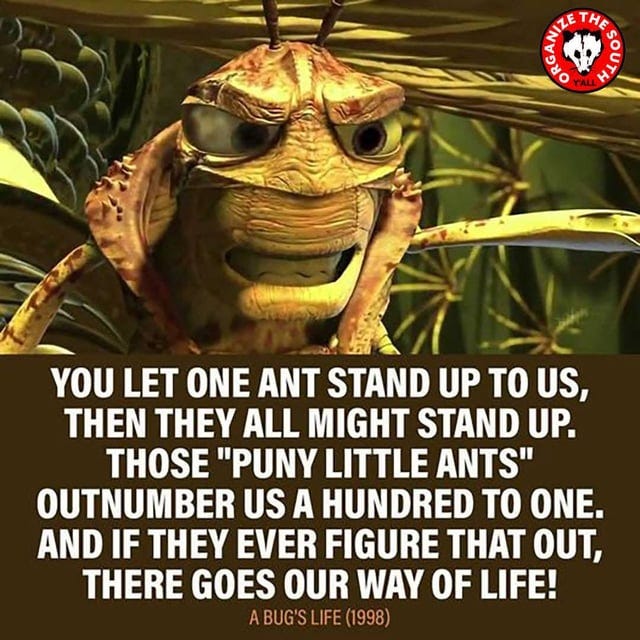
I often think about the scene in A Bug’s Life when Hopper realizes the ants outnumber the grasshoppers a hundred to one. He says “If they ever figure that out, there goes our way of life!”
In this situation, we are the ants. We do have power. Real, tangible, collective power. We’re seeing it unfold in real time—DEI rollbacks from large corporations like Target are facing massive backlash. Target’s stock tanked when they abandoned their values. Companies are scrambling as consumers demand accountability.
What I’ve seen even more during this time is how small businesses are thriving when they stand for something. Because the truth is, every dollar we spend is a vote. Every business we support is a choice. Every platform we engage with is a decision about what world we want to build. And I think these large companies are terrified of us remembering just how much power we have.
While I’ve lost followers when I speak about ICE (not to mention Gaza and what is happening in other countries) and what’s happening in our communities—some are angry stating I don’t know anything, and some unfollow immediately—you know what else is happening? I’m finding my people. I’m finding people willing to have these conversations, willing to share the same grief and rage and uncertainty. People who don’t have all the answers but are showing up anyway. People who feel alone but are realizing they’re not.
In conversation with a friend, we talked about how a lot of us are experiencing pain and grief during this time, not knowing how to move forward. She shared how she recently told someone that we must continue to create during this time, that our art is important and how our creativity is a catalyst for change, new ideas, and conversation.
I think it’s easy for us to want to stop. To simply be still. To put our creativity aside and wait for “the right time.” But it brings me back to the idea that when we are silent, when we play small and dim our light, we are also letting the system win.
My friend continued to say:
The grief is normal. We’re human with compassion and empathy for humanity. It’s painful. But remember that we make the most impact with our communities directly surrounding us. The power lies in the way we pour into the people around us now. They want us exhausted, angry, and confused when we need to be rested, focused, and moving with love and purpose.
That’s the strategy. Keep us scattered, scared, isolated, and angry. Because when we’re too tired to organize, too afraid to speak up, too alone to build community—that’s how they win. The same system instilling fear, hate, and division is the same system that has always worked to keep us apart. To keep us competing instead of collaborating. To keep us silent instead of speaking up.
But what they didn’t account for? People refusing to be complicit. Because the more they try to divide us, the more I’m seeing people come together. The more they try to silence us, the more I’m seeing people speak up. The more they try to isolate us, the more I’m seeing communities form. And while we may not be able to change the world overnight, we can absolutely impact our own communities. And that impact ripples.
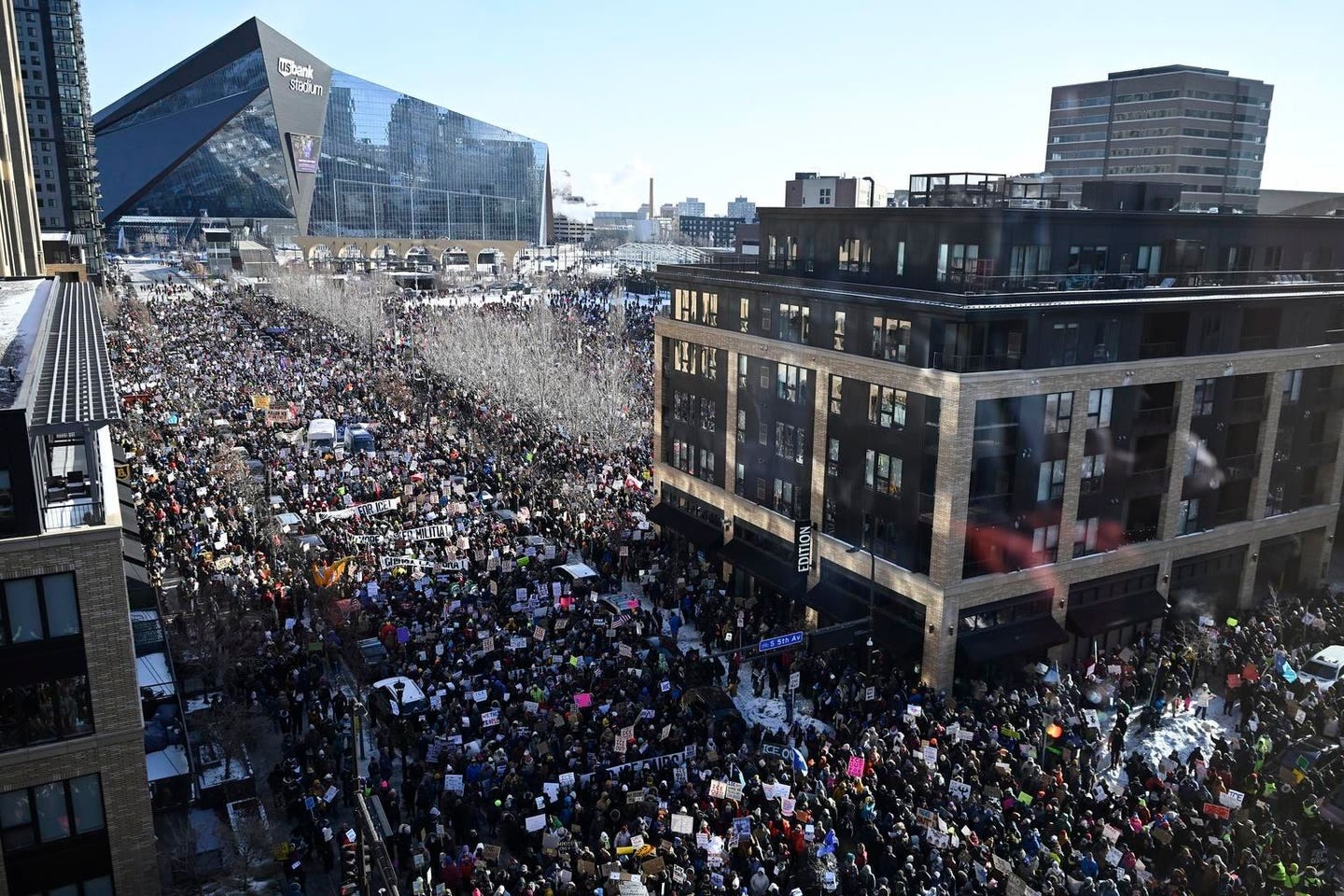
And the perfect example is how Minneapolis has shown up for their community. Where thousands of people have taken a part of their strike and economic blackout that involved no school, no work, and no shopping to demand ICE leave their city in the harshest weather.
While I don’t have all the answers, here are some ideas into what community power looks like inspired by what I’ve seen on other social media platforms. Things we can do now even if we feel helpless. Even when we feel like there is not much we ourselves can do.
Direct Mutual Aid
Buying groceries for neighbors who can’t leave their homes out of fear
Pooling money for bail funds
Sharing resources (food pantries, legal aid, mental health support)
Creating community fridges and supply stations
Platform & Visibility
Sharing accurate information
Amplifying voices from impacted communities
Using whatever platform you have (even if it’s “just” 100 followers)
Creating content that centers marginalized stories
Economic Power
Supporting immigrant-owned businesses
Choosing where we spend our money deliberately
Boycotting corporations that abandon their values
Amplifying small businesses taking a stand
Reading & Learning
Study the organizers who came before us, like Ella Baker, Grace Lee Boggs, and many more
Read about resistance movements: the Civil Rights Movement, the labor movement, Indigenous sovereignty movements, the AIDS activism of ACT UP
Share what you learn—education is community care
Skill Sharing
Offering your professional skills (legal, medical, creative, technical)
Teaching workshops on rights, safety, and organizing
Creating art that documents this moment
Writing, filming, recording what’s happening
Showing Up Physically
Attending community meetings
Joining protests and vigils
Being present at school board meetings, city council sessions
Filling spaces with bodies that refuse to look away
Creating Space for Grief and Processing
Hosting community circles
Creating art together
Sharing meals, stories, fears
Reminding each other we’re not alone
There is an extensive list of so much more we can do, but this is just how we can scratch the surface. How can we start and start small within our own communities?
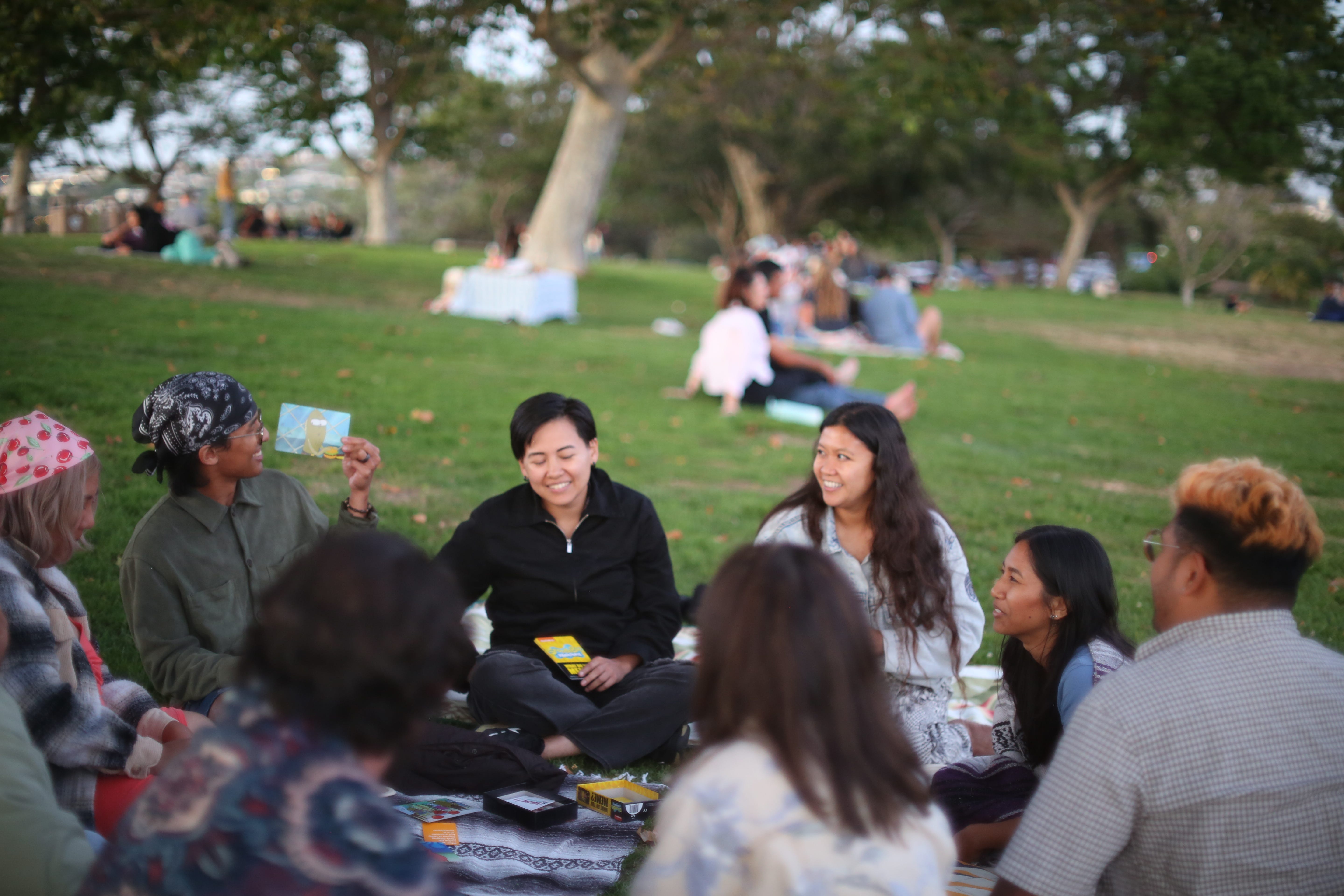
Last year, a friend and I started hosting Pause & Play gatherings as an effort to be present, be among good company, and share space. And it feels perfectly timed to bring that same energy back into the fold.
A handful of books I’m picking up to read and learn from:
Pleasure Activism by adrienne maree brown
My Grandmother’s Hands by Resmaa Menakem
No One Is Illegal by Justin Akers Chacón and Mike Davis
A People’s History of the United States by Howard Zinn
An Indigenous Peoples’ History of the United States by Roxanne Dunbar-Ortiz
We Do This ‘Til We Free Us by Mariame Kaba

What I feel like is important to note is that this is a journey that we alone can’t fix. My friend shared a solid point that this is generational work. Where the generation before us chipped away at these systems, the generation after us will continue.
And that doesn’t mean this work we are doing now doesn’t matter. But rather, it means every action we take now lays the foundation for what comes next.
Every conversation you have plants a seed. Every business you support votes with your dollars. Every post you share reaches someone who needs it. Every act of community care builds resilience. Every piece of art you create documents this moment.
This is how change happens. Not in one grand gesture, but in a million small acts of refusal. Refusal to be silent. Refusal to comply. Refusal to abandon each other.
We don’t have all the answers. We’re all figuring this out in real time, making mistakes, learning as we go, adjusting when we stumble. But what matters is that we show up anyway. Imperfectly. Messily. With our whole hearts.
Because they’re counting on us giving up. They’re betting that we’ll get too tired, too scared, too overwhelmed to keep going.
So we keep going. Not because we have it figured out, but because we refuse to let them win. Let’s keep going together. One step and one day at a time.
Nice list of actions <3
Yes, yes, yes!!! This was a powerful read and I could not agree with you more in regard to how we meet this moment. It doesn't always have to be grand gestures; chipping at the core of this system in small, community-centered moments and actions as how we make our way into tomorrow.